
201/304 Stainless Steel Trolley
Custom Stainless Steel
Our stainless steel trolleys, tool carts, platform trucks, and shelves are crafted from 201 or 304 stainless steel, offering both durability and elegance. Each piece combines solid construction with smooth mobility for industrial or commercial use. Available in custom-made options, our designs ensure long-lasting performance, corrosion resistance, and seamless function in any environment. Built for strength, designed for efficiency — one cart at a time.
Build With Strength
10 Years Of Stainless Innovation
We specialize in the production of 201 and 304 stainless steel trolleys/tool carts/flat carts. These products are designed to be sturdy and precise. Customization in stainless steel is supported.
680+
Projects Delivered Worldwide
10+
Years of manufacturing experience
1120+
Custom designs developed for clients
30000+
Units produced every year
Support customization
Quality Services
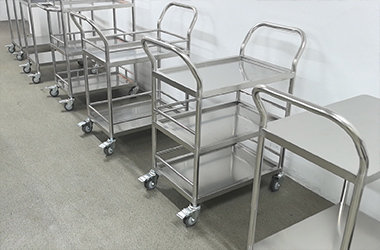
Double / Triple-layer handcart
S/S 201/304 stainless steel trolley, customized according to requirements or drawings.
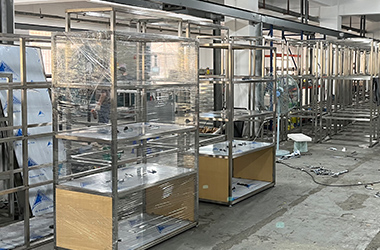
Multi-level shelves
S/S 201/304 multi-layer stainless steel shelving, customized according to requirements or drawings.
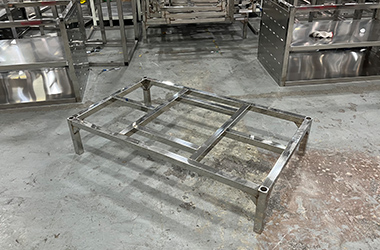
AGV turnover vehicle
S/S 201/304 AGV turnover vehicle, customized according to demand or drawing requirements
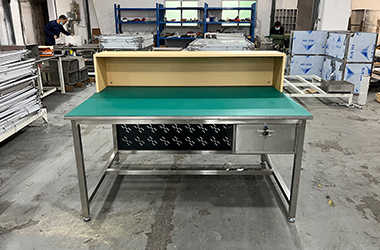
stainless steel workbench
S/S 201/304 stainless steel workbench, customized according to requirements or drawings.
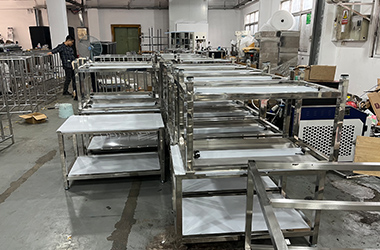
stainless steel small table
S/S 201/304 stainless steel small table, customized according to requirements or drawings.
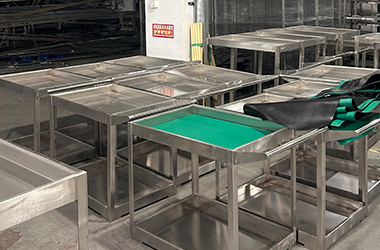
Anti-static Trolley
S/S 201/304 anti-static stainless steel trolley, customized according to requirements or drawings.
Supplier Highlights
We Are Both Manufacturer & Trader
Our factory integrates manufacturing and trading functions, providing strict quality control services. We support a wide range of customization options including full customization, design customization, and OEM/ODM solutions.
Our Customization Capabilities
We provide flexible customization options to meet different project needs:
- Light Customization
- Drawing Customization
- Sample Customization
- On-Demand Customization
- Free Design Service
Standard Products
High-Quality Stainless Steel Carts Built to International Standards
We specialize in manufacturing durable and practical stainless steel trolleys, designed for hotels, restaurants, factories, and laboratories.
All standard models are made of 201 or 304 stainless steel, featuring smooth welding, high load capacity, and easy-to-clean surfaces — meeting global safety and hygiene requirements.
Regarding our factory
Latest customer
Customized workbench
DongGuan, China
Multi-layer turnover cart
Multi-level shelves
Customized trolley
Whar Our Clients Say
Testimonials

Engineering Manager
Li Ming
The stainless steel cart I use in my kitchen is incredibly sturdy and reliable, with a smooth design that withstands daily heavy use and makes food prep efficient and hassle-free.

Warehouse Manager
John Davis
These stainless steel shelves have exceptional load-bearing capacity and corrosion resistance, proving to be a durable and cost-effective solution for our busy storage facility

Hospital Nurse
Tan Wei Ling
I'm impressed by the high-quality craftsmanship of the medical cart; it's easy to clean and maneuver, greatly improving patient care and workflow in our hospital wards

Lab Technician
Emily Brown
The customer service team provided outstanding support for our custom worktable order, ensuring timely delivery and a product that meets all our lab safety standards.
Request a Quote
Learn More From
Frequently Asked Questions
You can provide your requirements, and we will create the design drawings for confirmation before production; or you can provide the drawings directly, and we will manufacture according to your drawings.
Depending on your requirements and order quantity, production takes 10–30 days after drawing confirmation, excluding logistics and transportation time.
Adjustments can be made to product dimensions, material type, material thickness, wheel size, wheel quality, shelf thickness, and load capacity.
Information about stainless steel trolleys
- All
- Company News
- Hand Trolleys Insights
- Material Handling Tips
- Stainless Steel Solutions
Are Stainless Steel Trolleys Resistant To Heat?
What Gauge Stainless Steel Is Best For Trolleys?
What Type Of Stainless Steel Is Used For Trolleys?
What Are Some Disadvantages Of Stainless Steel Trolleys?
What Are Some Advantages Of Stainless Steel Trolleys?
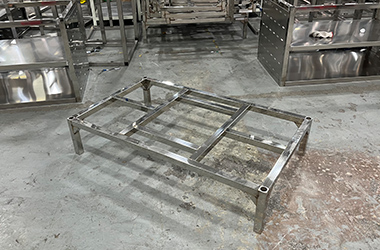
Master these tips to quickly identify stainless steel types
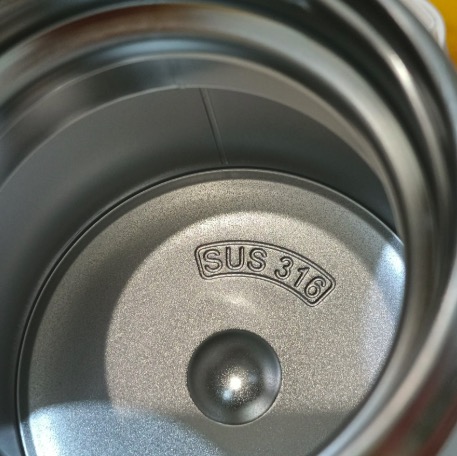
Stop being confused! Understanding 201, 304, and 316 stainless steel is key
Ultimate FAQ Guide to Stainless Steel Trolleys
Stainless steel is very resistant to various conditions like heat, humidity, impact, and chemicals.
Thus, the trolley will serve you longer than other types of materials.
Stainless steel is non-porous, making it a hygienic material to cook and serve food on—no toxins or bacteria will settle and get absorbed into the material.
Stainless steel is easy to clean, is durable, and requires very little maintenance
And if you are cautious about the environment, know that things manufactured from stainless steel can be recycled.
Stainless steel trolleys provide a sleek, industrial look, which can add style to your restaurant or hotel.
It will also uphold the minimalistic and functional atmosphere of medical applications.
Stainless steel trolleys are great for many applications, making your life and the work of your personnel easier.
Stainless steel trolleys may not be for you if you worry about noise, scratches, or fingerprints, since metal, in general, is susceptible to these.
Especially if you have metal cutlery or tools, they will clang against the stainless steel surface of trolleys.
This may be bothersome; although, you can soften the noise with cloth or napkins.
Scratches can also appear on stainless steel surfaces, but that depends on the polish you choose: mirror polish will suffer from scratches the most, while a brushed finish will mask scratches.
The same goes for fingerprints.
These can damage the aesthetics of the trolley.
Stainless steel is made by adding chromium, nickel, and molybdenum in different proportions to the iron-carbon alloy.
Steel grades differ in the content of all these additives.
Stainless steel trolleys are manufactured from stainless steel that has at least 10.5% chromium, so it can be made with steel grades 304, 316, and 430.
316 stainless steel grade protects the best against salt spray, certain acids and bases, and high temperatures because of its higher concentration of molybdenum.
Grade 316 is, thus, really good for cooking and medical uses.
Grade 304 is cheaper and more common in general use than grade 316, and it is also very durable.
There are also 316L or 304L stainless steel grades.
Grades 316L and 304L have a lower carbon content, making them a little bit stronger.
However, these types of steel are not very frequently used in the market.
Steel grade 430 is also very popular and cheap, but less durable than grades 304 and 316.
Grade 430 is less resistant to corrosion, although it has a high concentration of chromium.
We especially recommend grades 304 and 316 for stainless steel trolleys: because one is cheap and the other is exceptionally durable.
Lower steel gauges are stronger, thicker, and more expensive.
Commercial applications, like restaurant and hotel trolleys, usually request stainless steel of gauge 14, which is about 2 mm thick.
Commercial and medical lab trolleys need to be more durable, so thicker sheet metal is used.
Meanwhile, personal residential trolleys tend to be 16 or even 18 gauge stainless steel, which is equivalent to 1.3-1.6 mm in thickness.
This is because residential trolleys tend to be elegant and aesthetic rather than heavy-duty functional.
‘Stainless’ is a misleading label; this type of steel does get stained, but it does not corrode.
That is unless it comes in contact with concentrated bleach.
This is why it is important to clean your stainless steel trolley, but not with harsh chemicals.
Some substances discolour stainless steel, so it may appear rusted, but it is not corroded.
This is known as tea-staining, but it does not affect the lifetime of your stainless steel trolley.
Things like bleach, smoke, salt, heat tint, and harsh water typically stain stainless steel, damaging its aesthetic value.
Out of all materials you can use to make trolleys, stainless steel will resist heat the best!
However, because it is a metal, it will also conduct heat.
This means that if you put a hot cup or dish on it, the trolley may get very hot as well— and you or your personnel may get a slight burn.
So, be careful!
Stainless steel trolleys can be used in many applications.
They are used in residential, commercial, academic, and medical fields.
Stainless steel trolleys can be used to serve food in upper class residential homes.
These trolleys are often called tea-trolleys: they are small and are used to serve desserts or snacks.
Commercial applications for stainless steel trolleys include serving food in restaurants, hotels, school cafeterias, cafes aboard a ship, train, or airplane, anywhere where food needs to be wheeled around.
Trolleys can also be used to load housekeeping things for cleaning hotel rooms.
In the academic sphere, stainless steel trolleys can be used to move things around, perform scientific experiments, using them as tables, and move books in the library.
Stainless steel trolleys can also be used for medical applications, such as storing and moving around medical equipment, prescriptions, and food for patients.
Such trolleys are especially useful during surgeries or critical situations: equipment and tools can be mobile and always ready.
Also, stainless steel trolleys can be used in veterinary clinics to examine animals.
In such cases—food and medical—the trolleys can also be used as mobile worktops.
Factories also benefit from having stainless steel trolleys to move around heavy equipment.
Platform trolleys are also used in airports and train stations to carry luggage.
They are versatile and durable, making them suitable for any application.
There are many types of trolleys.
These include: platform, hand, folding, office, tool, warehouse, kitchen, housekeeping, airplane.
A platform trolley is a big platform with a handle and wheels used to transport heavy equipment, such as luggage, furniture for moving, and warehouse items.
These trolleys can have a hammered surface, so heavy items grips onto it better.
Foldable trolleys have joints that allow the trolley to collapse into smaller and flatter shape to save space when storing it.
Usually, platform and hand trolleys are made foldable, although other types can be foldable as well.
Office trolleys are simple trolleys used in offices to wheel around documents, printers, and various office supplies.
Such trolleys can also be used in libraries and schools to move around books and other equipment.
Tool trolleys are useful if you or your business requires work with many tools.
They have many narrow drawers for all the tools.
Such drawers can also be equipped with USB charging stations to charge the tools.
Such trolleys are also often used in schools and offices to charge and store rental computers and tablets.
Warehouse trolleys are big trolleys with shelves and caged walls to transport big and heavy equipment and many boxes.
Such trolleys can also be used in hotels to carry patrons’ luggage.
Kitchen trolleys can be of many types as well, and they include dish collector trolleys, barbeque trolley, bakery trolley, tea-trolley, and various simple trolleys with shelves.
Dish collector trolleys have deep-set shelves to hold piles of dishes.
These deep-set shelves maybe stainless steel or they can be plastic.
We can also manufacture custom stainless steel trolleys for your request, so contact us to chat about it!
Usually, the handle can be shifted down, while the platform can be pulled up.
Pulling up the platform also pulls on the wheels, which are either also pulled up or folded in.
As a result, the foldable trolley can lay flat on the ground and takes up very little space.
Hand trolleys can even be hidden behind the front seat of a car.
Typically, housekeeping trolleys have a lot of drawers and bins for different purposes.
Heaviest items go in the lower compartments, while lighter items go
higher up.
This means that all the towels and clean linen go lower while cleaning supplies go higher up.
Such trolleys also have a big trash bin and a bin for dirty linen attached to the sides.
There are also various smaller compartments for signs and other necessary materials.
There are also hooks for vacuums and other appliances.
Medical trolleys need to include a few things.
These are: a waste bin or bucket, a foldable side worktop, and several drawers and shelves.
Also, it is good if the main surface has marine edges so whatever is on the trolley does not fall off or spill out.
The trolley could also be colour-coded removable bins, storage units, oxygen cylinder holders, electric lamp holders, and four swivel casters with brakes.
Emergency trolleys have to carry EEG monitors, defibrillators, catheter mounts, CPR board, IV pole holder, and various other equipment.
Medical trolleys can also have siding tables and different organizers and hooks above the main trolley surface.
Stainless steel trolleys can be equipped with features such as foldable handles, foldable side tables, shelves, drawers, doors, grilles, decorative bars, bins, racks, legs, casters, and so much more.
Stainless steel trolleys can have many designs of handles, depending on what you request.
However, an important type of handle is foldable.
These are usually installed on platform trolleys or hand trolleys, but other types of trolleys can be designed with foldable handles as well.
Foldable side tables, or foldable worktops, add working area to the trolley, and can be used for catering or in medical applications.
Such worktops provide the trolley with functionality and mobility.
Trolleys can also have shelves and rails for more efficient storage.
Shelves for stainless steel trolleys can also be made from grilles.
Grilles can also be used to make a compartment or make a guard around the trolley surface, such as for warehouse trolleys.
Such grille carts are cheaper and lighter to wheel around.
Stainless steel trolleys can have various other storage units with doors, which can be equipped with locks.
Also, we can manufacture sets of drawers that can be used for cutlery, tools, medications, office supplies and anything else that you need.
Around the top, we can also install a guard rail or a decorative bar to prevent things from falling off the trolley.
Bins are deep trays used for when the trolley is designed to carry piles of things.
This includes dishes, warehouse items, hotel carts, and some medical waste carts.
Bins can also be installed outside the trolley, hanging from the side.
Usually, big garbage or laundry bins are installed like that.
Casters are small wheels on the bottom of your trolley.
There can be 2-wheel casters or 4-wheel; these may also have brakes.
There are many types of casters, and it is important to choose the right type.
If you request 2-wheel casters, we manufacture legs of various heights—long legs or short legs, depending on under-counter storage area.
All of these are custom, so contact us to discuss your design idea!
A wheel and a caster are not the same thing.
A wheel is a round object that rolls, rotating on an axle that passes through the center of the wheel.
A wheel can be solid or spoked.
Wheels can be made from polyurethane, steel, hard rubber, polyolefin, phenolic, nylon, and high-temperature-resistant material.
A caster is a frame that holds the wheel.
This frame can be either a swivel or a rigid frame.
A swivel caster is capable of rotating 360 degrees.
Such casters are very mobile, so they are great for hospital and restaurant settings.
A rigid caster frame is primarily used for straight-line travel, which means rolling strictly forward or backward.
Such casters are good for places with long straight halls, like hotels, airplanes, or schools.
They provide stability, although at the cost of agility.
In most instances, both a swivel caster and a rigid caster have two “legs” that hold the wheel.
Some types of casters include plate, locking, stem, and hollow kingpin.
Plate casters have a square mounting surface, which is good for heavy-duty stainless steel trolleys.
Locking casters have a locking mechanism that prevents the casters from rolling, which is useful when you need to secure the trolley in place, such as in a hospital, factory, or airplane.
Stem casters are mounted by a rod, which gives the trolley a sleek look perfect for restaurants, tea-trolleys, and hotel room service trolleys.
Hollow kingpin casters do not have any stems or mounting surfaces; instead they can be screwed to the trolley.
Kingpinless casters are essentially plate casters.
Some things to consider about the wheels: what is the maximum load you will put on the trolley, what surface are the wheels for, what sort of obstacles will the wheels bump into, are there special conditions of the environment.
These will influence the size and the material of the wheels.
Larger wheels are more heavy-duty and will pass easier over bumps and fissures; they are also more stable.
Smaller wheels are more agile and look more elegant.
Stainless steel wheels are good for medical and food industries, as well as factories with a corrosive environment.
Never put rubber wheels into a corrosive place!
Polyurethane or rubber wheels are resistant to slipping, do not produce noise, and are delicate on hardwood floors.
If you plan on carrying around fragile things, like tool trolleys, then pneumatic wheels are the best.
You can request various polishes and finishes, depending on the looks and functionality you want from your stainless steel trolley.
Various finishes include satin, brushed, mirror, as well as custom polishes like cross, vibration, and many more.
Satin polish is an abrasive polish that uses aluminum oxide as the abrasive substance.
This finish produces a fairly smooth surface good for stainless steel trolleys.
There is also brushed finish, which can be referred to as ‘hairline’.
This finish shows lines and is rougher to touch; brushed finish may not be great for food applications because the tiny grooves can accumulate grease and are harder to clean.
However, brushed polish does not show scratches and fingerprints.
Mirror polish is exactly what it sounds like — a very smooth mirror surface.
It is easier to clean, but any scratches and fingerprints are very prominent on such a surface.
Mirror polish does look very aesthetic, industrial, and futuristic.
Cross polish is similar to brushed, but the lines meet at 45-degree angles.
Vibration polish is basically brushed polish, but the lines are non-directional.
Such polish reflects the light in an interesting way, looking expensive, which may be great for residential trolleys.
It also protects from fingerprints.
Most often, however, mirror or satin polishes are done for trolleys.
If you need a custom polish, contact us and we will design it for you!
Furthermore, stainless steel can be passivated or electropolished.
Passivation is a chemical process that is used to help restore contaminated stainless steel to its original state.
Stainless steel is submersed into a diluted nitric acid or citric acid solution for some time.
This process removes foreign matter like corrosion—sometimes stainless steel does corrode, but it is rare—from the surface of the metal.
Other than giving stainless steel a clean finish, the process of passivation does not brighten or change the appearance of stainless steel.
Electropolishing is another process used to restore stainless steel.
With a combination of chemicals and electrical current, electropolishing carefully removes surface contaminants from stainless steel.
Electropolishing can also be used to remove heat tint, tea-staining, and other aesthetic imperfections.
This process removes as little as 0.0001 inches up to 0.0015 inches to produce the desired result.
Medical application requires electropolishing most often because it sterilizes stainless steel.
Both processes can prolong the life of stainless steel equipment like trolleys.
An edge profile is the design of the trolley’s edges.
Different types of edges have different aesthetics and functional purposes.
There are several ways to design an edge: square, beveled, bullnose, and marine.
Square edges— also called ‘flat’ edges—are the most common ones, and they look very professional.
These are common in the medical and food spheres.
Beveled edges are sloped either on the top, or both top and bottom.
This creates a safer edge, since there is no sharp top part.
Beveled edges also have a round look combined with the strictness of the slope.
Bullnose edges are rounded, providing safety against bumping into a sharp edge.
Such an edge profile is especially good for residential homes with children or entertainment places for children, since kids can hit their head on the trolley, and rounded edges won’t hurt as much.
Marine edges are slightly raised to prevent liquid from splashing onto the floor.
Such edges are popular aboard ships in the cooking spaces—if the ship rolls on the waves, food won’t fall off the trolley.
Also, such edges are useful in the medical application and food catering.
Since the trolley is always moving, marine edges prevent food or drink from falling off of it.