A Deep Dive into the Stainless Steel Family
Stainless steel, a material widely used in daily life and industry, is closely related to our lives. From tableware and sinks in the kitchen to railings and curtain walls in architectural decoration, and pipes and containers in industrial equipment, stainless steel is ubiquitous. Its excellent corrosion resistance, high strength, and aesthetic appeal have won it widespread popularity.
In simple terms, stainless steel refers to a type of steel that does not rust in weakly corrosive media such as air and water, or is resistant to corrosion in certain strongly corrosive media. Its main component is iron, with certain amounts of alloying elements such as chromium, nickel, and molybdenum. The addition of these alloying elements gives stainless steel its unique properties. Chromium is a key element in the formation of stainless steel. When the chromium content in steel reaches 10.5% or more, chromium forms a dense oxide film (passivation film) on the surface of the steel, preventing oxygen and other corrosive media from contacting the steel substrate, thus playing a role in rust prevention and corrosion resistance. Nickel can improve the toughness and corrosion resistance of stainless steel, allowing it to maintain good performance even at low temperatures. Molybdenum enhances the corrosion resistance of stainless steel in reducing media, especially showing a significant effect against chloride ion corrosion.
Stainless steel comes in many varieties and can be classified into different types according to various criteria. Common classification methods include classification by chemical composition, metallographic structure, and application. Different types of stainless steel differ in performance and uses, and understanding these differences helps us accurately select the appropriate stainless steel material for practical applications. Below, I will first introduce the common types of stainless steel classified by chemical composition and metallographic structure, and then explore in detail how to quickly distinguish them.
Judging from the appearance, the initial judgment
For those unfamiliar with stainless steel, observing its appearance is the most intuitive way to initially distinguish the type of stainless steel. This can be done by looking at the color, gloss, surface texture, and roughness.
Different types of stainless steel exhibit subtle differences in color and luster due to variations in chemical composition and processing techniques. Taking the common 304 and 201 stainless steels as examples, 304 stainless steel has a higher chromium and nickel content, resulting in a more uniform, bright, and lustrous silver-white surface, similar to a mirror finish. This luster is often seen on kitchen sinks and tableware, and tableware made from it feels shiny and appealing to the touch. 201 stainless steel, on the other hand, has a lower nickel content, resulting in a darker, mostly grayish-white color, and its luster is not as good as 304 stainless steel. Some inexpensive decorative pipes made from it do not appear as bright.
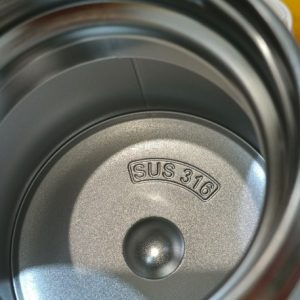
Surface texture and roughness can also provide clues for our judgment. Under the same processing technology, the surface roughness of stainless steel of different materials varies. 316 stainless steel is often used in food and medical equipment. After fine processing, its surface feels smooth and delicate to the touch. For example, some medical instruments in hospitals, such as surgical instruments, can be felt to the touch. On the other hand, some low-quality stainless steels, such as some 200 series stainless steels with more impurities, may have a slightly rough surface and are not smooth enough. In some small hardware stores on the street, you can see some simple parts made of this type of stainless steel, which feel less smooth to the touch.
Furthermore, the processing techniques used to manufacture stainless steel also affect its appearance. Polished stainless steel has a brighter surface, while brushed stainless steel displays a silky texture. For example, the stainless steel casings of some high-end home appliances may use a brushed finish, which is not only aesthetically pleasing but also reduces the appearance of fingerprints and scratches. However, it is important to note that appearance alone can only serve as a preliminary reference, as different processing techniques and surface treatments may obscure the inherent properties of stainless steel. Therefore, a comprehensive assessment using other methods is necessary.
Magnetic test, simple and efficient
Magnetic testing is a simple and effective method for distinguishing types of stainless steel, mainly because the magnetism of stainless steel is closely related to its internal crystal structure. Iron is the main component of stainless steel, and the crystal structure of iron determines whether stainless steel is magnetic.
Common austenitic stainless steels, such as 304 and 316, are generally non-magnetic or weakly magnetic. This is because austenitic stainless steel has a face-centered cubic crystal structure. In this structure, the arrangement of atoms results in the material itself having no significant magnetic moment, and therefore it is generally not attracted by magnets. For example, when you bring a magnet close to common 304 stainless steel tableware, you’ll find that there is almost no attraction between them. However, in actual production and processing, austenitic stainless steel may develop some magnetism due to cold working (such as cold drawing, cold rolling, cold forging, etc.). This is because cold working changes the crystal structure of the material; some austenitic grains transform into martensite, which has a body-centered cubic crystal structure. This structure makes the material magnetic. For example, some cold-worked 304 stainless steel springs may exhibit some magnetism.
Unlike austenitic stainless steel, ferritic and martensitic stainless steels typically exhibit significant magnetism. Ferritic stainless steel has a matrix primarily composed of ferrite with a body-centered cubic crystal structure. This structure gives it magnetism; common examples include 430 stainless steel, which easily attracts magnets and is used in electrical components requiring magnetic properties. Martensitic stainless steel has a martensitic matrix, and its mechanical properties can be adjusted through heat treatment. It also possesses magnetism. For example, 410 and 420 stainless steels are commonly used in the manufacture of knives. When a magnet is brought near them, a noticeable attraction can be felt because their microstructure, primarily martensite after heat treatment such as quenching, produces magnetism.
Duplex stainless steel, due to its matrix containing both austenitic and ferritic phases, also possesses magnetic properties. 2205 duplex stainless steel, used in some industrial pipelines and marine engineering applications, is attracted to magnets due to its unique crystal structure. However, it’s important to note that while magnetic testing is simple and convenient, it cannot be relied upon solely to determine the authenticity or quality of stainless steel. Some non-stainless steel materials may lack magnetism, and the magnetism of specially treated stainless steel may change. In practical applications, magnetic testing can serve as a preliminary assessment method; accurate identification of stainless steel type requires further analysis using other methods. For example, when given a piece of stainless steel, testing it with a magnet reveals significant magnetism, suggesting it may be ferritic, martensitic, or duplex stainless steel. If it lacks magnetism or has very weak magnetism, it may be austenitic stainless steel, but further analysis using methods such as chemical composition analysis is needed to definitively determine its type. Brands like Senpec have very strict quality control, relying not only on magnetic testing but also on a combination of professional testing methods to ensure product quality and performance meet standards.
Chemical reagents, precise targeting

The chemical reagent method is a method that uses the chemical reaction between certain elements in stainless steel and specific chemical reagents to determine the type of stainless steel by observing the reaction phenomenon. Common methods include the nitric acid droplet identification method and the copper sulfate droplet test identification method.
The nitric acid droplet identification method is based on the differences in the corrosion resistance of stainless steel to nitric acid. Generally, most stainless steels have good corrosion resistance to both concentrated and dilute nitric acid, and will not show obvious reactions after nitric acid is dropped on them. For example, common austenitic stainless steels such as 304 and 316 will basically remain unchanged after nitric acid is dropped on their surface, without discoloration or bubbles. However, high-carbon stainless steels such as 420 and 440 will be slightly corroded after nitric acid is dropped on them, and slight marks or discoloration may appear on the surface. Carbon steel turns brown when exposed to concentrated nitric acid, and will be severely corroded when exposed to dilute nitric acid, with rapid bubbling and dissolution on the surface. Non-ferrous metals will be immediately corroded when exposed to concentrated nitric acid. For example, in some scrap metal recycling plants, workers can use the nitric acid droplet method to preliminarily determine whether the collected metal is stainless steel.
The copper sulfate drop test is primarily used to distinguish between ordinary carbon steel and stainless steel. During the procedure, first remove grease and impurities from the stainless steel surface, and polish a small area with a soft cloth. Then, drop copper sulfate solution onto the metal surface. If it’s ordinary carbon steel or iron, a displacement reaction will occur on the surface, forming a layer of metallic copper, which will appear red. However, due to its special composition and structure, stainless steel will not undergo a displacement reaction with copper sulfate, and therefore will not produce copper precipitation or display a copper color. In small machining plants, workers can use this method to quickly determine whether the materials they are handling are stainless steel.
The advantage of the chemical reagent method lies in its relatively simple operation, requiring no complex equipment and providing results in a short time. It can quickly differentiate between common types of stainless steel and carbon steel. However, it also has limitations. For example, it can only provide a preliminary judgment, and it’s difficult to accurately distinguish the specific type of stainless steel with similar compositions. Furthermore, chemical reagents are corrosive, requiring careful safety precautions during use, and samples and tools must be thoroughly cleaned afterward. In practical applications, the chemical reagent method is often used in conjunction with other methods. For instance, in small hardware stores, owners can use magnetic tests for preliminary judgment when purchasing stainless steel products, followed by further verification using the chemical reagent method to ensure that the purchased products meet the requirements. Similarly, Sempec uses the chemical reagent method for quality control in its stainless steel production process, but also combines it with other more precise testing methods to guarantee product quality.
Spark identification: a matter of experience
Spark testing is a method that uses the characteristics of sparks produced when steel is ground on a grinding wheel to determine its chemical composition. The principle is based on the oxidation-reduction reaction between carbon and oxygen during the grinding process, which generates sparks. When steel comes into contact with a high-speed rotating grinding wheel under certain pressure, the ground metal particles move at high speed along the tangential direction of the grinding wheel and are heated to a molten state by the grinding heat, forming bright streamlines. At this time, the surface of the metal particles on the streamlines is oxidized to form a thin film of FeO. The carbon in the steel reacts with the FeO to produce CO gas. When the CO gas breaks through the surface oxide film, an explosion occurs, forming a spark. If unreacted FeO and C remain in the exploded fragments, the reaction will continue, producing secondary, tertiary, or multiple explosions of sparks.
When performing spark spectroscopy, a handheld or benchtop grinder is required. A standard 46-60 grit alumina wheel is recommended. Handheld grinders typically have a diameter of 100-150 mm, while benchtop grinders have a diameter of 200-250 mm. The grinding wheel speed is usually 2800-4000 rpm. Operation should be performed in dimly lit conditions, preferably in the dark, to avoid strong light affecting the judgment of spark color and clarity. The spark should be directed slightly above horizontal to facilitate observation of the spark streamer length and shape characteristics of different parts of the spark. Moderate pressure should be applied; higher pressure is used to observe the carbon content of the steel, while lower pressure is used to observe the alloying elements in the material.
Different types of stainless steel produce different spark characteristics during grinding. Taking the common 201 and 304 stainless steels as examples, 201 stainless steel has a relatively high carbon content and generally produces one or two bursts of sparks with short tails and numerous, dispersed sparks. 304 stainless steel has a lower carbon content and produces one burst of sparks or no sparks at all, with longer tails and fewer, more linearly dispersed sparks. Furthermore, chromium stainless steel produces thinner, dimmer spark clusters that bloom into single flowers with five or six star-shaped branches and slight cracks at the tips. Nickel-chromium stainless steel produces thinner, dimmer spark clusters that bloom into single flowers with slightly longer awns, five or six branches, and smaller flower shapes. High-speed steel produces long, thin spark clusters with fewer streamlines, no spark bursts, a deep red color, discontinuous streamlines at the base and middle, and an arc-shaped tail.
Alloying elements in steel also affect spark characteristics. Ni, Si, Mo, and W, among others, suppress spark crackling. For example, nickel has a weak suppressive effect on spark crackling, resulting in an uneven and smaller spark pattern, and finer streamlines compared to carbon steel. As the nickel content increases, the number and length of streamlines decrease, and the color darkens. Silicon also suppresses spark crackling; when the silicon content reaches 2%-3%, it shortens the spark lines. Silicon-manganese spring steel produces orange-red sparks with thick, short streamlines and few, short, thick, and sparse spark lines, resulting in lower resistance during spark testing. Tungsten has the strongest suppressive effect on spark crackling; when the tungsten content reaches around 1.0%, spark crackling is significantly reduced. At 2.5% tungsten content, the sparks appear bald. The higher the carbon content in tungsten steel, the darker the reddish spark. Conversely, Mn and V, among other alloying elements, promote spark crackling.
While spark ignition can quickly determine the approximate type of stainless steel, it requires a high level of experience from the operator, necessitating long-term practice and observation for accurate identification. Furthermore, the spark characteristics of different types of stainless steel can sometimes differ only slightly, leading to misjudgments. In practice, safety precautions must be taken to avoid burns from sparks. A comprehensive analysis of the identification results is crucial, and if necessary, other identification methods should be combined to further confirm the type of stainless steel. For example, Sempec uses spark ignition as one of its quality testing methods for stainless steel materials, but it is performed in conjunction with specialized testing equipment and highly experienced personnel to ensure the accuracy of the results.
Technological marvel: Sempek handheld spectrometer
In today’s rapidly developing technological world, there is a remarkable device that can quickly and accurately detect the type of stainless steel: the Senpec handheld spectrometer.
The Sempec handheld spectrometer is an advanced instrument based on XRF spectral analysis technology. When high-energy X-rays with energies higher than the binding energy of inner-shell electrons collide with an atom, they expel an inner-shell electron, creating a vacancy and placing the entire atomic system in an unstable state. At this point, an outer-shell electron jumps into the vacancy, producing a primary photoelectron. The emitted photon may be absorbed again, expelling another secondary photoelectron from the outer shell, resulting in the Auger effect. The energy released when the outer-shell electron jumps into the inner-shell vacancy is emitted as photons, producing X-ray fluorescence, the energy of which corresponds one-to-one with the element. By converting the characteristic X-ray spectral signals of the sample elements into electrical signals using an X-ray detector, the characteristic information of the analyte can be obtained, thus accurately analyzing the content of various elements in stainless steel.
In the stainless steel production and processing process, Sempec handheld spectrometers play a crucial role. They help workers monitor the composition of stainless steel materials in real time, enabling rapid compositional analysis on the production floor. For example, in large stainless steel production plants, workers can use them on the production line to test the content of elements such as chromium (Cr), nickel (Ni), and molybdenum (Mo). The content of these elements directly affects the performance and quality of stainless steel. Once a compositional deviation is detected, the production process can be adjusted promptly, ensuring product quality and preventing product defects caused by material issues. This significantly improves production efficiency and reduces production costs.
In material identification, the Sempec handheld spectrometer is equally adept. It can quickly determine the authenticity of a material by comparing its composition with the spectral characteristics of a standard sample. In the scrap metal recycling market, recyclers can use it to quickly identify the type and value of stainless steel scrap, preventing the receipt of counterfeit, substandard, or unqualified materials and avoiding economic losses. In the construction engineering field, procurement personnel can use the Sempec handheld spectrometer on-site to test stainless steel building materials, ensuring that the purchased materials meet architectural design requirements and guaranteeing the quality and safety of the construction project.
Compared to traditional detection methods, the Sempek handheld spectrometer offers significant advantages. It is easy to operate, requiring no specialized technicians, thus lowering the barrier to entry for testing. Its analysis speed is extremely fast, displaying results in just seconds, greatly improving detection efficiency. Furthermore, its small size and light weight make it portable, allowing for testing anytime, anywhere, without location restrictions. It can be used in factory workshops or field construction sites. Simultaneously, it boasts high precision and excellent repeatability. Utilizing advanced electronic technology and precision optical components, it ensures the accuracy of analytical data, providing users with reliable test results.
However, there are some precautions to take when using the Sempec handheld spectrometer. Before testing, ensure the sample surface is clean and free of contaminants, oxide layers, or roughness, as these factors can affect the spectrometer’s measurement results. Appropriate polishing and cleaning of the sample is recommended. Instrument calibration is also crucial; the instrument should be calibrated regularly using standard samples to ensure its stability and accuracy during measurements. Operators must also follow the instrument’s instruction manual to avoid measurement errors caused by misoperation.
In summary, the Sempek handheld spectrometer provides an efficient and accurate solution for quickly distinguishing different types of stainless steel. It has broad application prospects in all aspects of stainless steel production, processing, sales, and recycling, and is an indispensable and powerful tool for the stainless steel industry.
Summary and Outlook
To distinguish different types of stainless steel, we can approach it from multiple angles. Visual inspection can give us a preliminary judgment, magnetic testing is simple and convenient, chemical reagent methods are highly accurate, spark identification relies on experience, while the Sempec handheld spectrometer is a highly efficient tool aided by technology. Each method has its unique advantages and applicable scenarios. In practical applications, we should flexibly select and comprehensively utilize these methods according to specific circumstances.
For example, in daily life, when we buy stainless steel tableware, we can first observe its appearance and conduct a magnetic test to make a preliminary judgment on its type. If we have higher requirements for product quality, or if the procurement and use of stainless steel materials are involved in industrial production, construction engineering and other fields, we need to use professional tools and methods such as chemical reagent methods, spark identification methods, or even Sempec handheld spectrometers to conduct more accurate testing and analysis.
With the continuous advancement of technology, we believe that more advanced and convenient methods and tools will emerge in the future to help us more quickly and accurately distinguish between different types of stainless steel, allowing this excellent material to play a greater role in various fields. We hope that through this article, you will master these techniques for distinguishing stainless steel types and better utilize stainless steel materials in your life and work.