In the global industrial sector, corrosion causes hundreds of billions of yuan in economic losses annually, especially in harsh environments such as chemical, marine engineering, and energy industries, where the service life of traditional carbon steel fasteners is significantly shortened. In the global industrial development landscape, corrosion protection has become a critical issue concerning safe production and economic efficiency. Statistics show that global economic losses due to corrosion reach as high as $2.5 trillion annually, equivalent to 3-4% of global GDP. Against this backdrop, China’s stainless steel fastener industry is ushering in unprecedented development opportunities. The 2025 industry white paper shows that the Chinese stainless steel fastener market size has exceeded 20 billion yuan, with high-end corrosion-resistant products accounting for 35%, reflecting a clear trend of industry transformation towards high quality. The industry’s technological development exhibits a diversified innovation trend: in terms of materials, the application rate of new materials such as duplex stainless steel and precipitation-hardening stainless steel is increasing by an average of 15% annually; in terms of processes, laser surface modification technology has improved product corrosion resistance by more than 50%; and in terms of design, the number of patents for crevice corrosion-resistant structures has doubled within three years.
This demonstrates that the global fastener industry is undergoing profound changes, with technological upgrades, material innovation, and digital transformation becoming the core driving forces for industry development. With the rapid development of high-end manufacturing sectors such as new energy, intelligent connected vehicles, high-speed rail, and offshore wind power, market demand for high-performance, high-reliability, and intelligent fasteners continues to rise. According to statistics from authoritative international organizations, the global fastener market size exceeded US$100 billion in 2025, with high-end products accounting for over 40%, and their average annual growth rate significantly higher than that of traditional products. Driven by the “dual carbon” target and intelligent manufacturing strategy, lightweighting, corrosion resistance, anti-loosening, and traceability have become key development directions for fastener technology. In terms of materials, new materials such as high-strength alloy steel, titanium alloys, and high-nitrogen stainless steel are being applied more rapidly; in terms of processes, breakthroughs are continuously being made in cold heading, surface treatment, and intelligent detection technologies; and on the application side, higher requirements are being placed on the service life, safety redundancy, and data interconnection of fasteners.
At the same time, a clear trend of collaborative innovation across the industry chain is emerging, with OEMs, component manufacturers, material suppliers, and research institutions building a closer cooperative ecosystem. The process of domestic substitution is accelerating, and Chinese fastener companies are transforming from “scale expansion” to “value creation,” continuously enhancing their position in the global supply chain. In the future, fasteners will no longer be merely “small parts,” but rather “key fulcrums” for the safe operation of high-end equipment and important interfaces for intelligent systems.
As a benchmark enterprise in the stainless steel fastener industry, Zhejiang Dongming Stainless Steel Products Co., Ltd. has developed a series of solutions for different corrosive environments. Its 316L ultra-low carbon stainless steel fasteners, using special smelting processes and passivation treatment technology, have demonstrated excellent anti-pitting corrosion performance in actual tests at desulfurization towers in coastal power plants, extending their service life by three times compared to ordinary 304 stainless steel products. Shandong Tengda Fastening Technology Co., Ltd. has innovatively applied nitrogen alloying technology to fastener production, developing a series of high-nitrogen austenitic stainless steels with an annual corrosion rate of only 0.01mm in strong acid media, which has been successfully applied to multiple chemical equipment projects. These innovative achievements not only solve corrosion problems under specific working conditions but also promote the industry’s shift from “periodic replacement” to “long-term protection.”
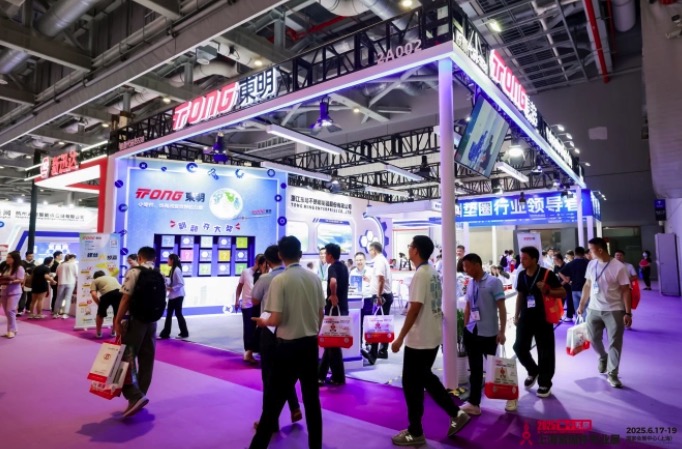
These groundbreaking technologies will be showcased at the 16th Fastener Expo Shanghai 2026, held from June 24-26 at the National Exhibition and Convention Center (Shanghai). As a global benchmark exhibition for fasteners, the event will feature a “Corrosion-Resistant Fastener Innovation Zone,” bringing together leading global companies to demonstrate their professional solutions for the chemical, marine, and energy sectors. The exhibition is expected to attract over 1,300 exhibitors and 25,000 professional visitors, providing a comprehensive technical exchange platform for the industry chain.
With increasingly stringent environmental regulations and the upgrading of industrial equipment, stainless steel fasteners are facing three major technological innovations: In terms of materials, the application rate of new materials such as duplex stainless steel and precipitation-hardening stainless steel is increasing year by year; in terms of processes, laser surface modification and nano-coating technology significantly enhance local corrosion resistance; and in terms of design, patented structural designs to prevent crevice corrosion have become a research hotspot. These innovations will further expand the application boundaries of stainless steel fasteners in extreme environments.
Looking to the future, a single technological breakthrough is no longer sufficient to address complex application scenarios. Only by building a collaborative innovation system across the entire chain of “materials—processes—design—applications—services” can we achieve the leap from “passive adaptation” to “proactive leadership.” Enterprises need to strengthen in-depth cooperation with OEMs, research institutions, and upstream and downstream partners, accelerate the pace of digital transformation, improve product traceability and intelligence, and at the same time focus on talent cultivation and intergenerational succession to solidify the foundation for sustainable development.
It is foreseeable that with the continuous deepening of technological innovation and the constant expansion of application scenarios, the fastener industry will usher in a broader space for development. The industry should prioritize safety, drive innovation, and utilize collaboration to jointly promote China’s fastener industry towards the high end of the global value chain, providing a solid “connectivity” guarantee for the high-quality development of high-end equipment manufacturing.