
In the wave of intelligent and refined transformation of the manufacturing industry, stainless steel non-standard customized processing has become a key technology for solving the needs of complex working conditions and special scenarios, thanks to its core advantages of “design on demand and precise manufacturing”. From the pressure-resistant shell of deep-sea probes to the radiation-resistant terminals of nuclear power plant instrument boxes, from the anti-sway shelves of high-speed rail dining cars to the sterilization-grade supports of medical laboratories, non-standard customized processing is reshaping the value chain of traditional manufacturing industry with an annual market growth rate of 12%.
Deep integration of process matrix
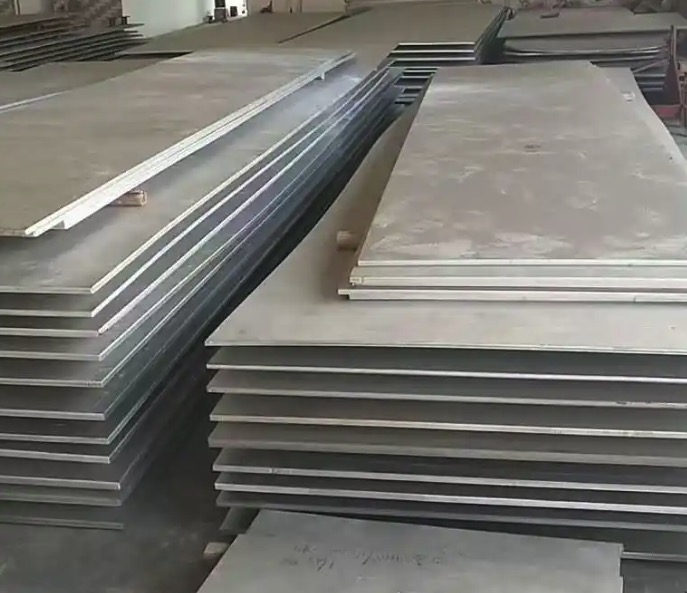
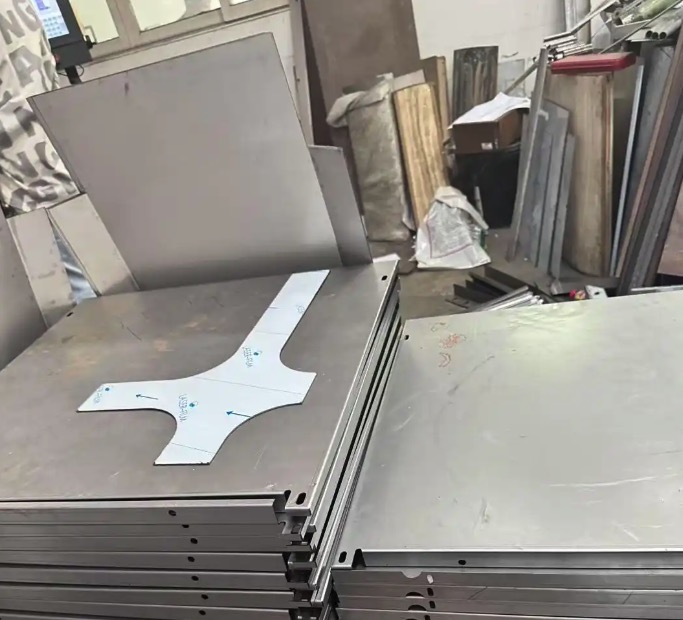
Customized non-standard stainless steel processing has established a four-in-one process system integrating laser cutting, precision bending, intelligent welding, and surface treatment. Taking the tripods for the spectator passages at the Beijing Winter Olympics as an example, their load-bearing capacity exceeds the national standard by 38%. Through 3D modeling and finite element analysis of 316L stainless steel, and using laser cutting and cold pressing processes, a static pressure load of 120kg per square centimeter was achieved with a wall thickness of only 8mm. At the same time, PVD titanium plating treatment ensures that the bracket maintains zero deformation under a temperature difference of -30℃ to 60℃.
In the chemical industry, a company designed a non-standard interface for acid solution flow pipelines. Through plasma cutting and argon arc welding, the single-sided tilt angle was precisely controlled at 12°. Combined with a special sealing groove structure, this increased the flow rate by 40% while reducing the interface creep rate by 65% compared to standard parts. This process integration capability enables non-standard processing to meet the needs across scales, from micron-level electronic components to tens-meter-level building components.
2. Innovative Applications of Materials Science
Non-standard customization is driving the evolution of stainless steel materials towards functionalization and composite applications. In the field of deep-sea exploration, gradient strength stainless steel developed for the 2000-meter water pressure environment utilizes vacuum heat treatment technology to achieve a surface hardness of HV500 while maintaining the core’s toughness of HV200, overcoming the “hard and brittle” defects of traditional homogeneous materials. In the medical field, low-magnetic stainless steel has been developed with a remanence strength ≤0.5Gs, meeting the safety requirements of equipment in nuclear magnetic resonance environments.
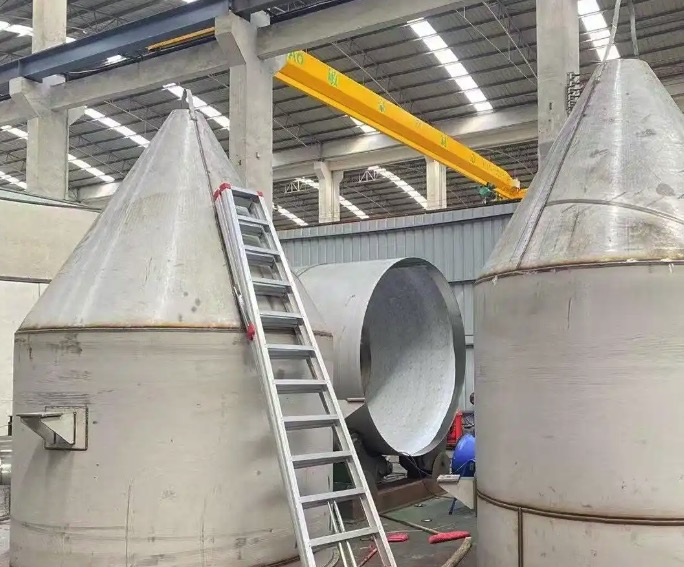
Breakthroughs have also been achieved in surface treatment technology. An environmental protection company customized a three-bend tank for oil filtration tanks, using a nano-crystallization process to form a 0.2μm thick chromium oxide film layer on the inner wall of the tank, which improves corrosion resistance by 3 times compared to the traditional passivation process. At the same time, fluorocarbon spraying extends the outdoor service life to 15 years.
II. Industry Applications: The Value Leap from “General” to “Special”
1. The “Customized Heart” of High-End Equipment Manufacturing
In the wind power sector, non-standard processing has solved the corrosion problem of foundation bolts. Through a ring-lock base design, welding strength is increased to 30 kg tensile force per square millimeter. Combined with Dacromet coating, components can pass 2000 hours of salt spray testing in high-salt-spray coastal environments. In the automotive industry, non-standard processes are used to modify flexible welding gun stands in final assembly workshops. Employing a six-layer honeycomb structure buffer zone, temperature deformation error is controlled within 0.3 mm, achieving a five-fold improvement in accuracy compared to standard brackets.
2. “Precision Protection” in the Life Sciences
Medical devices impose near-stringent requirements on non-standard manufacturing. A hospital, in collaboration with a manufacturer, developed an orthopedic positioning stent. Using data from 100 patient studies to construct a 3D model, and employing 0.2mm precision laser cutting and mirror polishing, the surface roughness Ra of the clamping area was reduced to ≤0.04μm, preventing tissue damage. Meanwhile, the grounding terminals of nuclear power plant instrument boxes undergo specialized passivation treatment, extending the oxidation critical period to twice that of standard parts, ensuring 10 years of stable performance under gamma-ray radiation.
3. “Hidden Champions” in Infrastructure Development
In the construction industry, non-standard processing has solved the manufacturing challenges of irregularly shaped components. For example, a curtain wall transition component for a super high-rise building, through 3D molding and fluorocarbon spraying, maintains structural stability under temperature differences ranging from -20℃ to 80℃, while controlling installation errors within ±0.1mm. In 5G base station construction, the outer frame of a micro generator uses a mesh composite support plate design, reducing weight by 35% while passing an eight-level wind test, thus solving the vibration problem of traditional solid structures.
III. Industrial Ecosystem: From “Single-Point Breakthrough” to “Systemic Innovation”
1. The “Intelligent Manufacturing Revolution” Empowered by Digitalization
Digital twin technology is reshaping non-standard manufacturing processes. A machinery manufacturing company’s virtual processing system, by collecting over 200 parameters such as the power and air pressure of a laser cutting machine in real time, increased the yield rate of 304 stainless steel stamping parts from 98% to 99.97%, and reduced the cost per piece by 18%. The application of an AI vision inspection system enables the identification speed of surface defects in 0.5mm thick stainless steel strips to reach 50m/min, a 25-fold increase in efficiency compared to manual inspection.
2. The “Sustainable Transformation” of Green Manufacturing
Dry machining technology has become the new industry standard. The use of low-temperature cold air combined with minimum quantity lubrication (MQL) technology extends tool life by three times and reduces cutting force by 22% in stainless steel turning, while simultaneously reducing cutting fluid usage by 92%. A company’s closed-loop recycling system has increased scrap recycling rates to 98%, reducing solid waste emissions by 2,500 tons annually and carbon emissions by 63%.
3. “Value Extension” of Service Model
Leading companies are transforming from “product suppliers” to “solution providers.” A stainless steel pipe fitting customization factory has established a “five-step” service system: needs analysis → process simulation → rapid prototyping → mass production → full lifecycle maintenance, shortening customer project cycles by 40%. In the food machinery field, for customized requirements on the opening ratio of conveyor rails, the company has developed a modular design platform that can quickly generate over 200 standard combination solutions, reducing the design cycle from 15 days to 3 days.
IV. Future Trends: The Evolution from “Technology-Driven” to “Ecosystem Symbiosis”
With the maturation of 3D printing metal deposition technology, non-standard processing will enter a new era of “additive manufacturing.” A laboratory has developed a selective laser melting (SLM) process that has achieved one-time forming of complex internal channels in 316L stainless steel, shortening the manufacturing cycle from 45 days using traditional methods to 7 days. In the field of materials, breakthroughs have been achieved in the research and development of graphene-reinforced stainless steel, whose yield strength is 2.3 times higher than that of ordinary 304 stainless steel, providing a new option for equipment operating under extreme conditions.
Collaborative innovation across the industry chain has become crucial. A cross-industry alliance has integrated resources from material suppliers, equipment manufacturers, and end-users to establish a “non-standard processing demand database,” which has collected over 120,000 sets of application scenario data. Through big data analysis, it enables intelligent recommendations of process parameters, improving the development efficiency of customized products by 60%.
In conclusion, custom-made stainless steel non-standard processing is evolving from a niche demand to a mainstream choice. Statistics show that the Chinese non-standard stainless steel processing market exceeded 80 billion yuan in 2025, with a compound annual growth rate of 14.3%. Against the backdrop of manufacturing transformation and upgrading, this technology will continue to push physical limits and expand its application boundaries, becoming a crucial force driving China’s leap from a “manufacturing giant” to a “smart manufacturing powerhouse.”

